
Plate Anchors and Headed-Stud Embed Plates
Plate-foot lifting anchors combine an anchor stem with a plate at the embedded end. Headed-stud embed plates use one or more studs attached to a steel plate for a specified cast-in connection.
Request a Quote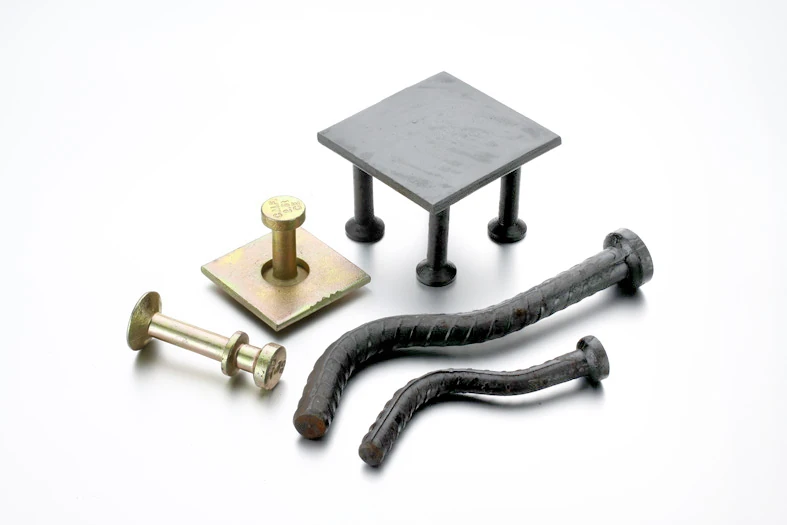
Reference dimensions
Reference sizes for quotation planning. Final dimensions, material and finish are confirmed against the agreed drawing.
| Component | Plate length × width × thickness | Stem or stud diameter | Head diameter |
|---|---|---|---|
| Single-stem plate anchor | 70 × 70 × 6 mm | 14 mm | 26 mm |
| Single-stem plate anchor | 90 × 90 × 8 mm | 20 mm | 36 mm |
| Four-stud embed plate | 6 × 6 × 3/8 in | 1/2 in | 7/8 in |
The embed-plate example uses four studs, each 3-7/8 in long. The single-stem examples use a different assembly.
Plate-foot anchors and cast-in steel plates
Identify the intended function on the drawing. A plate-foot lifting anchor is selected with its lifting system, while a headed-stud embed plate is detailed as part of the project’s concrete-to-steel connection.
What distinguishes an embed plate from a plate-foot lifting anchor?
The component arrangement and intended connection define the part. The photo contains both designs. Show the plate position, stem or stud layout and function so the correct assembly can be quoted.
Selection and application details
- Specify plate length, width, thickness and material, with stem or stud dimensions.
- Provide stud count, centers, edge offsets, projection and weld requirements.
- Include the intended load case, concrete element details and the approved connection or lifting design.